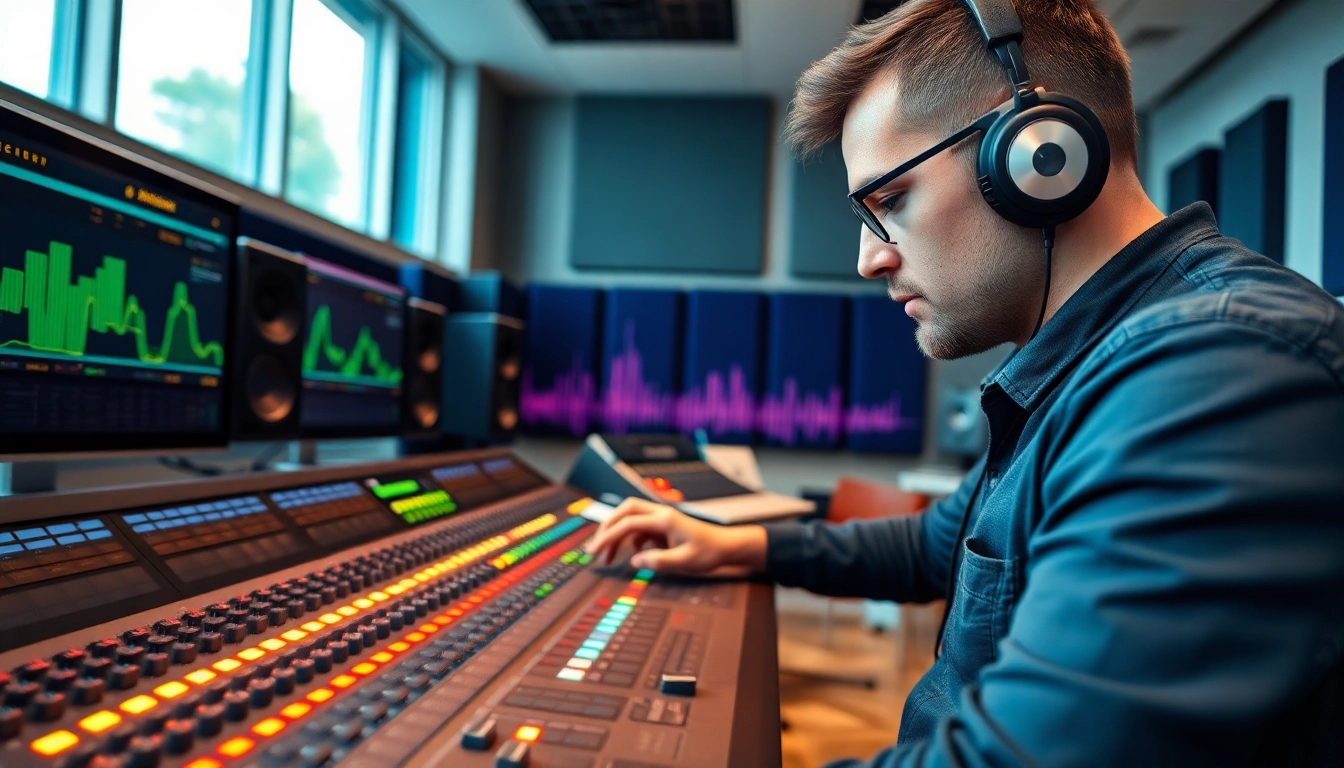
Understanding Online Audio Mastering
What is Online Audio Mastering?
Online audio mastering is the final step in music production, where mixed tracks are processed to enhance their overall sound quality. This process involves adjusting the tonal balance, dynamic range, and loudness to ensure the music meets industry standards and sounds great across all playback systems. Unlike traditional mastering that may involve physical studios and engineers, online audio mastering provides a remote solution, allowing artists and producers to upload their tracks and receive polished masters quickly and efficiently. Through platforms specializing in online audio mastering, users can leverage advanced algorithms and expert feedback to achieve professional results without geographical constraints.
Importance of Mastering in Music Production
Mastering holds a crucial place in the music production workflow. It not only finalizes your track’s sound, bringing closure to the production process, but it also serves several key purposes:
- Uniformity: Mastering ensures that all tracks in an album or playlist maintain a cohesive sound, providing a smoother listening experience.
- Volume Optimization: Proper mastering maximizes the track’s loudness while preventing distortion, enabling it to stand out in competitive playlists and radio.
- Technical Compliance: It prepares the tracks according to industry standards, making them ready for distribution on various platforms.
- Emotional Impact: Mastering can enhance the emotional resonance of a track, ensuring that it connects with listeners.
Key Elements of Effective Mastering
Effective mastering is more than just a technical exercise; it is an art form that combines multiple elements:
- Equalization (EQ): Balancing frequencies to ensure nothing is overpowering and the mix remains natural.
- Dynamics Processing: Using compression to control the dynamic range and enhance the impact of the sound.
- Loudness Maximization: Adjusting overall volume levels to meet streaming guidelines without sacrificing sound quality.
- Imaging: Enhancing stereo width to create a more expansive sound stage.
- Final Format Conversion: Preparing the track in its final format, whether digital or physical, ensuring compatibility across all platforms.
Essential Tools for Online Audio Mastering
Digital Audio Workstations (DAWs)
A Digital Audio Workstation (DAW) is essential for online audio mastering. DAWs such as Pro Tools, Logic Pro, and Ableton Live provide the necessary environment for editing and mastering audio tracks. Not only do they offer recording and editing capabilities, but they also provide various plugins that assist in mastering tasks. When selecting a DAW for mastering, it is vital to choose one whose interface supports an efficient workflow and flexible routing options.
Mastering Plugins and Software
Several plugins and software applications are specifically designed for mastering audio:
- Equalizers: Plugins like FabFilter Pro-Q and Waves SSL E-Channel are popular for precise EQ adjustments.
- Limiters: Tools such as iZotope Ozone Maximizer and FabFilter Pro-L are used to maximize loudness safely.
- Metering Tools: Accurate metering is crucial in mastering. Tools like Youlean Loudness Meter help in monitoring levels effectively.
- Multi-band Compressors: These allow for selective compression based on frequency ranges, helping to control dynamics without unwanted artifacts.
- Reverb and Stereo Widener: Plugins that add a sense of space and enhance stereo imaging can also be beneficial in the mastering stage.
Hardware Considerations for Online Mastering
While much of the mastering process can be executed using software, certain hardware components can enhance the quality:
- Audio Interface: A high-quality audio interface is critical for capturing and monitoring sound accurately.
- Monitors: Studio monitors that provide a flat frequency response are essential for making precise adjustments.
- Control Surfaces: These can improve workflow and hands-on control during the mastering process.
- Headphones: A reliable pair of studio headphones is useful for checking mixes in different environments and for detailed listening.
Techniques for High-Quality Mastering
Balancing Frequencies and Dynamics
Achieving a balanced mix of frequencies is a hallmark of a professional master. Here, frequency balancing involves utilizing EQ to cut or boost specific ranges to enhance clarity and presence. Moreover, controlling dynamics through compression ensures that loud and soft sections of the track engage listeners without losing musicality. It’s essential to make these adjustments subtly to avoid artifacts.
Applying Compression and Limiting
Compression is one of the most potent tools in mastering. By controlling the dynamic range, a compressor can help maintain a consistent volume level across the track. However, over-compressing can lead to a flat sound. Limiting, on the other hand, is applied at the final stage to ensure no peaks exceed 0 dB, preventing distortion. The goal is to achieve a loud but still dynamic master that retains the essence of the original mix.
Creating a Cohesive Sound Across Tracks
When mastering an album, it’s important to create a cohesive sound across all tracks. This process involves analyzing the tonal balance and dynamics of each track and adjusting them to maintain a unified style. Consistent spending in dynamics and EQ across the tracks helps create an album experience rather than a collection of disparate songs, enhancing the overall flow and narrative.
Common Challenges in Online Audio Mastering
Overcoming Technical Issues
Technical issues such as latency, incorrect file formats, or processing power limitations can hinder the mastering process. To overcome these, ensure your system has adequate RAM and processing capabilities, and export files in professional formats (e.g., WAV or AIFF) for mastering. Regularly updating your software and utilizing reliable plugins can also reduce complications.
Avoiding Common Mastering Mistakes
Many pitfalls can derail the mastering process, such as using too much compression, neglecting low-end frequencies, or failing to reference tracks in the same genre. To avoid these mistakes, always listen critically and utilize reference tracks to ensure your master aligns with industry standards. Frequent breaks during the mastering process can aid in maintaining objectivity and clarity.
Tips for Collaborative Mastering Online
When collaborating on mastering projects online, clear communication is vital. Utilize file-sharing platforms to ensure easy exchange of audio files and provide clear and constructive feedback. Establishing a set timeline for revisions and being open to receiving critiques is equally important. Using project management tools can streamline collaboration, ensuring everyone stays on track and the project moves forward smoothly.
Measuring Success in Online Audio Mastering
Testing Your Master on Various Platforms
After finishing your master, it’s essential to test how it performs across various platforms and playback systems, from high-end speakers to earbuds. Different environments may reveal different strengths and weaknesses. Running tests on streaming services is particularly important, as their algorithms often adjust the sound to fit commercial standards.
Seeking Feedback from Industry Professionals
Feedback from peers and industry professionals can provide fresh perspectives on your mastering quality. Whether it’s fellow musicians, audio engineers, or mastering professionals, constructive criticism can reveal areas for improvement, helping refine your skills and understanding of the mastering process.
Metrics for Evaluating Mastering Quality
Evaluating the quality of your master can be assessed via multiple metrics. Key performance indicators include volume levels, dynamic range, frequency balance, and clarity across multiple playback systems. Tools such as loudness meters provide quantitative data, while listening sessions offer qualitative assessments. Combining both approaches ensures a well-rounded evaluation of your mastering efforts.
Frequently Asked Questions
What is the difference between mastering and mixing?
Mastering is the final process that prepares a mixed track for distribution, focusing on overall polish, loudness, and tonal balance, while mixing involves blending individual audio tracks to form a complete piece.
Can I master my own tracks with online tools?
Yes, many online platforms provide accessible tools for self-mastering. However, professional mastering often yields better results due to experience and specialized equipment.
How long does the mastering process take?
The timeline for mastering can vary widely. Online services may provide quick turnarounds of 1-2 days, while more detailed mastering with direct feedback could take longer, depending on the complexity.
What file formats should I use for mastering?
WAV or AIFF formats are recommended for mastering due to their high fidelity. It’s crucial to provide files with sufficient bit depth and sampling rate to preserve audio quality.
Is it worth investing in professional online mastering?
Yes, professional online mastering can significantly enhance your track’s sound quality and help meet industry standards, allowing your music to compete effectively in the digital marketplace.